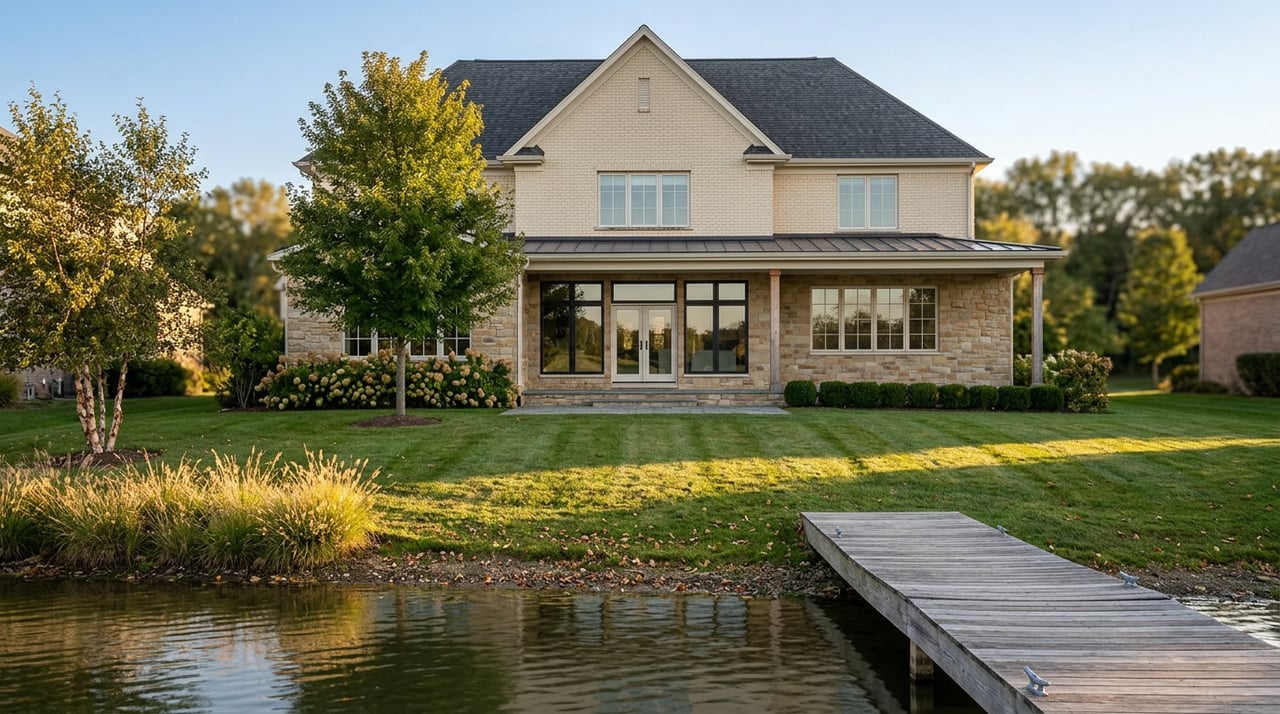
A listing came across the market not long ago for an updated ranch in Orion Township with a headline that gave away the whole game: it promised lake living without the lakefront taxes. The pitch was honest. The home had access to Lake Orion, and the seller wanted buyers to know that was a feature, not a compromise.
That single sentence explains more about this market than any median price chart. Two homes can sit three blocks apart, look similar from the street, and price hundreds of thousands of dollars apart, and the gap has almost nothing to do with square footage or finishes. It comes down to a question most buyers never think to ask until an offer is already in: what exactly does this deed give me access to?
The name covers more water than buyers assume
"Lake Orion" reads like a single body of water on a listing sheet, and the largest piece of it is genuinely one lake: an all-sports, 470-acre lake that sits inside the Village of Lake Orion and Orion Township, with a maximum depth of about 58 feet. But the address "Lake Orion, MI" and the school district that shares its name also wrap around several other, entirely separate lakes that get folded into the same search results. Voorheis Lake is a 250-acre private, all-sports lake with its own association, park, and beach. Bunny Run Lake connects by canal to Long Lake, another all-sports body. Indianwood Lake, sometimes listed as Lake Dunblane, sits near the Indianwood golf course and runs quieter, electric-motor waters. Pungs Lake and Manitou Lake round out the group, each with its own frontage, its own rules, and its own price behavior.
A buyer searching "Lake Orion waterfront" is really searching six different products at once, and the listing copy doesn't always make that obvious.
There's a second layer worth knowing, because it explains why so much of this waterfront exists in the first place. Lake Orion as it stands today was formed by damming Paint Creek in the 1830s, and canals were later dredged specifically to maximize lake frontage. The extra shoreline that makes so many of these listings possible was engineered, not discovered. That history matters for a legal reason too: According to Michigan Lakes and Streams Association, Michigan courts have treated riparian rights differently on artificial or dammed lakes than on naturally formed ones. Lake Orion's mixed origin means a title search is not a formality here. It's the document that tells you whether your particular stretch of shoreline carries the rights you assumed came with it.
What the price data actually shows
Here's where the spread becomes visible in real numbers, and where reading the fine print pays off.
| Segment | Data point | Time window |
|---|---|---|
| All Lake Orion listings (median list price) | $500,000 | July 2026 |
| Lake Orion, MI home value index (average, up 5.5% year over year) | $414,605 | As of April 2026 |
| Listings tagged specifically "waterfront" | $399,000 median list, 22 active listings | Late August 2026 |
| Listings tagged specifically "lakefront" | $650,000 median list, 14 active listings | Late August 2026 |
| Village of Lake Orion Downtown (walkable core) | $325,000 median sale | January 2026 |
Read that table straight and it looks contradictory. How can "waterfront" listings have a median list price below the all-listings median while "lakefront" listings run well above it? The answer is that the two words aren't interchangeable in how sellers use them. "Waterfront" gets applied loosely, to canal frontage on smaller connected lakes, to condos overlooking a pond by a golf course, to homes with any wet edge on the parcel. "Lakefront" tends to get reserved for parcels with direct, undisputed frontage on the big all-sports lake itself, the kind with sandy beach, a private dock, and unobstructed views. The word choice in the listing is doing real pricing work.
The downtown figure needs one more caveat before anyone treats it as a trend. That $325,000 median for January 2026 reflected exactly one home sale that month, down from two sales the same month a year earlier, even though the price itself was reported up sharply year over year. A single transaction can swing a "median" by tens of thousands of dollars and produce a headline percentage change that means almost nothing about the direction of the market. When a hyperlocal pocket of Lake Orion shows a dramatic jump or drop, check how many sales are actually behind it before reacting to the number.
The exclusivity you're paying for isn't the water
Here's the detail that reframes the whole premium. Lake Orion has a public access boat launch on the north side of the lake, administered by the Michigan Department of Natural Resources. Michigan's riparian rules give shoreline owners rights to a dock, to reasonable use of the water in front of their own property, and to the bottomland out to a point.
So when a buyer pays the premium for a true lakefront parcel, they aren't buying exclusive water. They're buying the land, the private dock rights that attach to it, the direct swimming access, and the view. That's a real and defensible premium. It's just a different thing than what a lot of buyers picture when they hear "private lake."
The access-only side of the market runs on a parallel but separate logic, and Bunny Run Lake is a clean example. Homes there sit on a canal that leads to Bunny Run Lake itself
Island parcels add one more friction point that's easy to miss in a scroll through photos. Lake Orion has several islands with year-round homes, but only Bellevue Island and Park Island connect to the mainland by bridge, meaning normal car access exists for those two. The rest, including Romance Island, Preston Island, Dot Island, and Armada Island, are reachable only by watercraft. That distinction affects everything from winter access to how a lender and an insurer treat the property, and it's worth confirming outright rather than assuming from a listing photo of a dock.
What to actually check before writing an offer
- Pull the recorded deed and legal description yourself, and look for the specific language.
- Request the recorded easement or the association's governing documents directly. A sentence in a listing description is marketing copy, not a legal instrument.
- If the property routes lake access through an association, ask about the current dock-slip waiting list before assuming one will open up.
- Confirm which specific lake the parcel touches and what its boating rules are. An electric-motor-only lake like Indianwood is a very different lifestyle than an all-sports lake, even if both get marketed under the Lake Orion name.
- For any island or peninsula parcel, confirm the actual mode of access, bridge or boat, before assuming standard timelines for financing and insurance will apply.
A couple of questions worth asking early
What should I confirm before assuming a dock comes with the deal? Confirm what's actually permitted in writing before assuming a dock comes with the deal.
What should I check on a canal-front home? Check the recorded documents for the parcel.
None of this means access-only homes are a lesser purchase. For a lot of buyers, lower maintenance, lower cost, and seasonal use of an all-sports lake is exactly the right trade. The mistake is assuming the word "lake" in a listing title tells you which trade you're actually making.
If you're comparing Lake Orion listings and want someone to walk the deed, the easement, and the association rules with you before you write an offer, Sold by Emily has spent two decades working this exact stretch of Oakland County. Schedule your free consultation and get the specifics before the price surprises you.
This article is general information, not legal, tax or financial advice. Consult a qualified professional about your situation.